
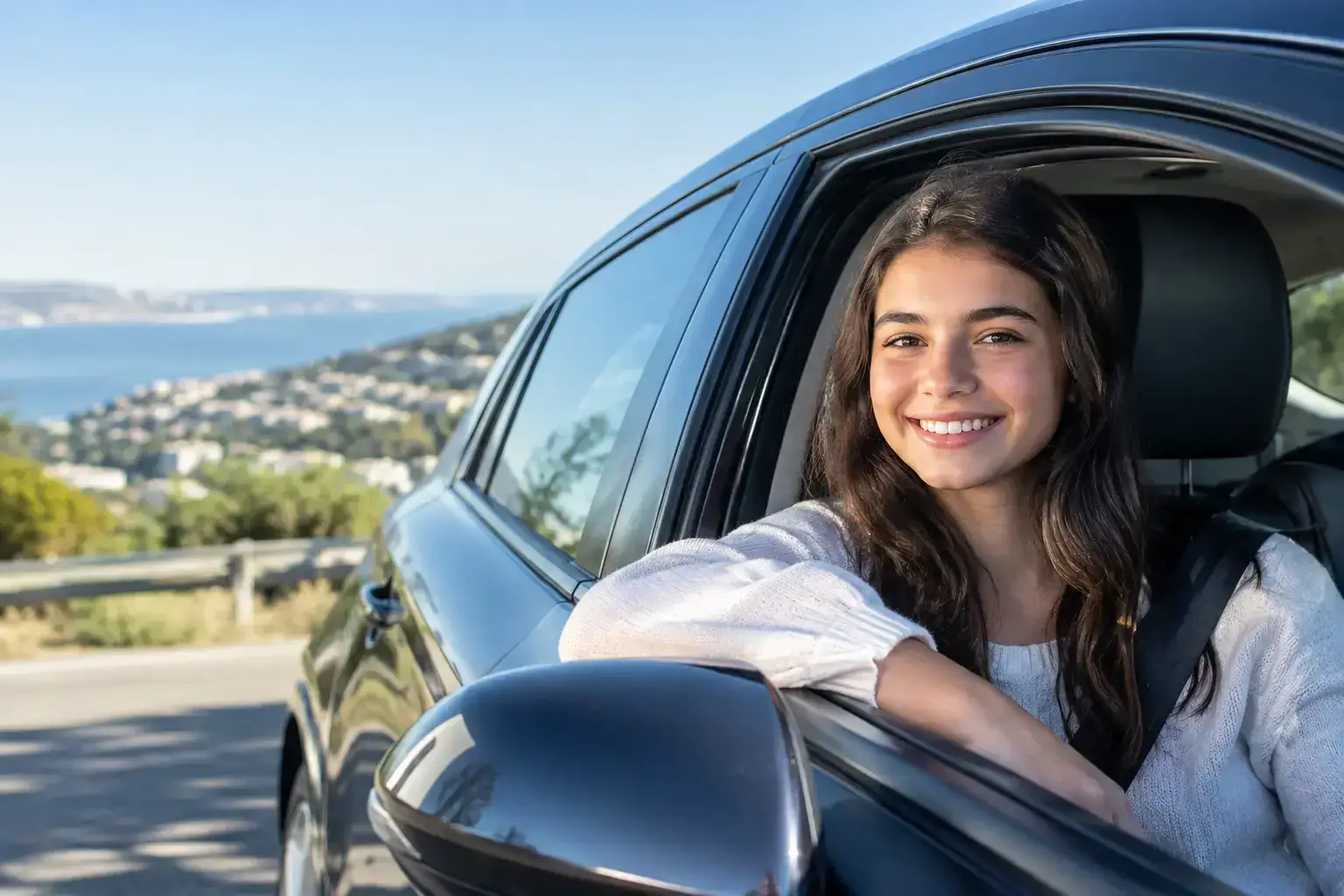
A teenager earning a driver’s license changes more than the family calendar. It changes the household’s financial exposure every time the car leaves the driveway. The best coverage for teenage drivers is not simply the least expensive policy that meets California’s legal requirements. It is coverage that can protect the teen, the family’s savings, and the assets you have worked hard to build after a serious accident.
Teen drivers have less experience recognizing hazards, judging distance, and responding under pressure. That does not mean they are irresponsible, but it does mean a small driving error can become an expensive claim. California families need a plan that balances a realistic premium with meaningful protection.
Start With Liability Coverage, Not the Monthly Price
Liability coverage pays for injuries and property damage your driver causes to others. It is the foundation of an auto policy, and it deserves more attention than the lowest available premium.
California’s minimum liability requirements increased in 2025 to $30,000 for bodily injury to one person, $60,000 for bodily injury per accident, and $15,000 for property damage. Those limits may satisfy the law, but they can be exhausted quickly. A modern vehicle repair, multiple damaged cars, an emergency-room visit, or a serious injury claim can easily exceed them.
For many families, limits such as $100,000/$300,000/$100,000 are a more practical starting point. The first two numbers address bodily injury liability per person and per accident. The third addresses property damage. Higher limits may be appropriate when your household owns a home, has substantial savings, has future income to protect, or has a teen who regularly drives in congested areas.
There is no one liability limit that fits every family. Still, choosing minimum limits solely to reduce the premium can create a large gap between what the policy pays and what the family may owe after a severe loss. If a claim exceeds the limit, the injured party may seek recovery from the at-fault driver and, depending on the circumstances, the household.
Why a Teen Driver Can Affect the Whole Household
When a teen is licensed and lives at home, the insurer generally needs to know about them, even if they drive only occasionally. Leaving a resident licensed driver off the policy can lead to underwriting issues, denied discounts, coverage questions, or an unexpected premium adjustment later.
A teen’s accident can also affect the household’s future insurance costs. One at-fault loss may result in surcharges, the loss of a good-driver discount, or fewer carrier options at renewal. In California’s already challenging insurance market, maintaining a clean driving history is especially valuable.
Parents should also understand who owns the vehicle and whose name appears on the policy. A car titled to a parent, a vehicle financed for a teen, and a car shared by several family members can create different insurance considerations. The details matter, so it is worth reviewing them before keys are handed over.
Collision and Comprehensive: Protecting the Car Itself
Liability covers damage you cause to others. Collision and comprehensive coverage address damage to your own vehicle, subject to a deductible.
Collision coverage can pay to repair or replace a vehicle after an impact with another car, object, or rollover. Comprehensive coverage addresses many non-collision losses, including theft, vandalism, falling objects, fire, animal strikes, and some weather-related damage. In California, comprehensive can be particularly relevant in areas with theft concerns, wildfire-adjacent conditions, or exposure to falling trees and debris.
Whether these coverages make sense depends on the vehicle’s value, the loan or lease terms, and the family’s ability to replace the car from savings. A lender or leasing company will usually require both collision and comprehensive. Even on a paid-off vehicle, dropping physical-damage coverage means accepting the full cost of repairing or replacing that vehicle after a covered loss.
The deductible is the amount paid out of pocket before the policy contributes. A higher deductible can lower the premium, but it should be an amount the family can comfortably pay on short notice. Choosing a $2,000 deductible to save money is not helpful if a minor accident creates financial strain.
Choose a Vehicle With Insurance in Mind
The car itself strongly affects the cost of insuring a teenager. A modest, well-rated vehicle with reasonable repair costs is often easier to insure than a high-performance model, a luxury vehicle, or a vehicle with expensive parts.
Safety features can help reduce risk, although they do not guarantee lower premiums with every carrier. Automatic emergency braking, backup cameras, stability control, and strong crash-test performance are worth considering. The goal is not to buy a car based on insurance alone. It is to avoid pairing an inexperienced driver with a vehicle that is costly to repair, easy to steal, or capable of encouraging risky driving.
Do Not Overlook Uninsured and Underinsured Motorist Coverage
A careful teen can still be hit by someone else. Uninsured and underinsured motorist coverage can help with injuries caused by a driver who has no insurance or insufficient liability limits. In a state where many drivers carry only minimal coverage, this protection can be one of the most valuable parts of the policy.
Families often focus on the damage their teen could cause, which is understandable. They should also consider the cost of medical care, lost wages, and long-term recovery if their teen or another family member is injured by an inadequately insured driver. Review these limits alongside liability coverage rather than treating them as an afterthought.
Medical payments coverage may also be worth discussing. It can help pay certain medical expenses for covered occupants regardless of fault, subject to the policy’s terms and limits. It is not a substitute for health insurance, but it can provide useful support after an accident.
Consider an Umbrella Policy for Added Liability Protection
An umbrella policy provides liability protection above the limits of auto and homeowners or condo insurance. For households with a home, investments, savings, rental property, or significant income, it can be a sensible part of a broader protection plan.
Most umbrella policies require specific underlying auto liability limits, often at least $250,000/$500,000/$100,000 or a combined single limit equivalent. The umbrella may provide $1 million or more in additional coverage after the underlying policy limits have been used.
This is not necessary for every family. It becomes more compelling as assets and income grow, or when a household wants stronger protection from the financial consequences of a major auto liability claim. A teen driver is a good reason to review whether the household’s existing liability structure still fits its risk.
Look for Discounts, but Keep Them in Perspective
Teen-driver premiums can be uncomfortable, especially when the teen is added to a multi-car household. Discounts can help, but they should not drive the coverage decision.
Good-student discounts may be available for students who meet the insurer’s academic standards. Driver-training discounts, telematics programs that monitor driving behavior, multi-policy savings, and distant-student discounts may also apply. A student attending school without regular access to a family vehicle may qualify for a different rating treatment, depending on the carrier.
Telematics deserves an honest conversation. It can reward safe habits such as gentle braking, lower nighttime driving, and reduced phone distraction. However, families should understand what is measured, how long the program lasts, and whether risky driving patterns could affect the rate. Privacy preferences and driving routines matter here.
Review the Policy Before the Teen Drives Alone
Before independent driving begins, confirm that every household driver and vehicle is properly listed, that liability limits reflect the family’s financial picture, and that deductibles are manageable. Ask how permissive use works, whether friends are allowed to drive the vehicle, and what happens if the teen borrows someone else’s car.
It is also wise to set clear family rules around passengers, nighttime driving, phone use, rideshare driving, and out-of-state trips. Insurance supports recovery after a loss. It does not replace consistent coaching, safe habits, and a clear understanding of California’s provisional license restrictions.
The best coverage for teenage drivers should be reviewed as circumstances change. A new car, a move to college, a ticket, an accident, or a growing household balance sheet can all justify another look. Safe is Better can help California families compare policy structures and identify where a low premium may be leaving an avoidable gap. The right conversation now can give a new driver room to learn while helping protect the people depending on them.