
Hey California drivers, feeling the pinch of sky-high auto insurance premiums? You’re not alone. With rates climbing over 30% since 2023, finding the cheapest auto insurance California has to offer feels harder than ever. But stick around and I’ll show you exactly how to slash those costs, from understanding new minimum requirements to uncovering hidden discounts most people miss. Let’s get started.
1. Understand California’s Minimum Liability Requirements

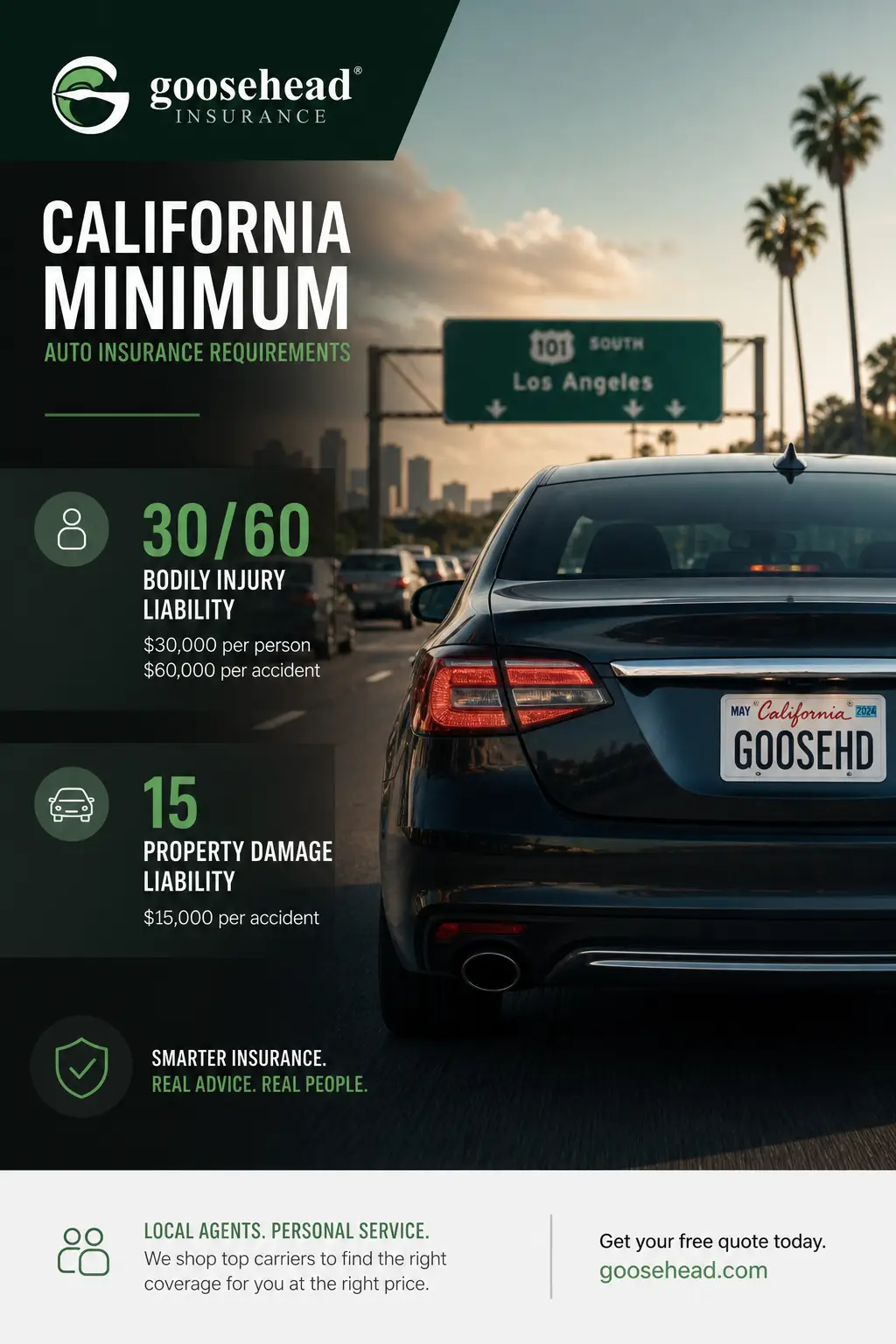
First things first: you need to know what coverage you’re legally required to carry. As of January 1, 2025, California raised its minimum liability limits from the old 15/30/5 to 30/60/15. That means you need at least $30,000 per person for bodily injury, $60,000 per accident, and $15,000 for property damage. This change came from California’s DMV insurance requirements, which now mandate higher limits to better protect drivers.
But here’s the key: if you’re still on the old limits, your policy will update at renewal. Expect a premium increase of roughly 8 to 20 dollars a month, according to industry estimates. That’s not huge, but it’s still money. And if you only carry minimum coverage, you’re putting yourself at risk. A minor accident can easily exceed those limits, leaving you on the hook for thousands.
Bottom line:Upgraded minimums mean higher costs, but they also mean better protection, don’t skimp if you can afford a bit more.
2. Know the Key Factors That Affect Your Premium

Insurance companies look at several things to set your rate. In California, they can’t use credit score or gender, thanks to Proposition 103, so they lean heavily on your driving record, zip code, age, and driving experience. According to a report from the Los Angeles Times, rates have surged due to rising repair costs, heavier vehicles, and inflation. Your zip code alone can cause huge differences: a driver in San Jose might pay $36 a month, while the same driver in Los Angeles pays $58.
Also, your age matters. Teen drivers see the highest rates, while those in their 30s and 40s get the best deals. If you’ve got tickets or accidents, expect a 20-40% increase. But even with a blemish, some insurers like GEICO still offer competitive rates.
Bottom line:Know what drives your rate so you can control what you can, like your driving record and mileage.
3. Compare Quotes from Multiple Insurers
This is the golden rule. Rates vary wildly between companies for the same driver. A study from NerdWallet shows that GEICO offers the cheapest full coverage at $113 a month, while others like Farmers average $231. That’s a difference of $1,416 a year. The California Department of Insurance also provides a premium comparison tool at insurance.ca.gov to help you see sample rates.
When comparing, make sure you’re looking at the same coverage levels. Get quotes from at least three to five companies. Online comparison tools make it easy: just enter your zip code and driving info. But don’t stop at the first result. Some insurers specialize in certain profiles, like Mercury for millennial drivers or CSAA after an accident.
Bottom line:Don’t settle for the first quote. Comparing across insurers can save you hundreds per year.
4. Take Advantage of Available Discounts
Every insurer offers discounts, but not all are created equal. The biggest savings often come from bundling home and auto insurance. For example, Allstate’s bundling page highlights multi-policy discounts. In California, bundling can slash your premium by 5-25%. Also look for: safe driver discounts (no accidents or tickets for 3-5 years), low mileage discounts, and defensive driving course discounts. Some companies like USAA offer a 20% safe driver discount for military families.
Other discounts include: paperless billing, paying in full, anti-theft devices, and even good student discounts for young drivers. Stack as many as you qualify for. Sometimes you can get a discount just for asking.
Bottom line:Discounts add up. Check each box and combine them for maximum savings on the cheapest auto insurance California carriers offer.
5. Consider Usage-Based Insurance Programs
If you drive less than average, you could save big with a pay-per-mile or telematics program. Nationwide’s SmartMiles program is available in California (though not all states). As explained on Nationwide’s SmartMiles page, you pay a base premium plus a per-mile rate. If you only drive 5,000 miles a year, your savings could be substantial.
However, be aware that California currently restricts the use of telematics for pricing (unlike most states). The Coalition for Safe Driving Incentives is pushing to change that, as noted in a Bankrate article. For now, pay-per-mile is available but you won’t get behavior-based discounts like in other states. Still, for low-mileage drivers, it’s worth checking.
Bottom line:If you drive few miles, usage-based insurance could be the cheapest auto insurance California offers for your driving habits.
6. Check Out the Cheapest Insurers in California
Let’s look at the numbers. , these are the cheapest full-coverage insurers in California:
| Insurer | Average Monthly Premium | Best For |
|---|---|---|
| USAA | $46 | Military families only |
| GEICO | $113 | Good drivers, full coverage |
| Travelers | $188 | Customer satisfaction |
| State Farm | $172 | New drivers |
| Progressive | $136 | Coverage add-ons |
But remember: these are averages. Your actual rate depends on your profile. For example, for liability-only, GEICO is cheapest at $24/month. For teens, Wawanesa is often cheapest. Use the CA Department of Insurance tool to get personalized comparisons.
Bottom line:Look beyond national names, regional insurers like Auto Club of SoCal can be cheaper in your area.
7. Don’t Forget California’s Assigned Risk Program
If you have a poor driving record (multiple accidents, DUIs) or can’t get insurance elsewhere, California’s Low Cost Automobile Insurance Program (CLCA) is a safety net. It’s available to income-eligible drivers, as detailed on the California Department of Insurance page. To qualify, your income must be at or below 250% of the federal poverty level (about $32,400 for a single person in 2021). Your car must be worth less than $25,000, and you need a valid CA license.
Premiums range from $244 to $966 per year depending on your county. That’s incredibly cheap, but coverage is limited to liability only. If you’re a good driver but low income, you might still qualify. This program is administered by the California Automobile Assigned Risk Plan (CAARP).
Bottom line:The CLCA program offers the cheapest auto insurance California has for low-income drivers, but it’s liability-only.
8. Understand Why Credit and Gender Aren’t Factors
In most states, your credit score and gender can affect your rates. Not in California. Proposition 103 prohibits insurers from using these factors. That levels the playing field. So, unlike in Texas or Florida, a woman with good credit won’t get a better rate than a man with similar driving history. Instead, insurers rely on your driving record, years of experience, and annual mileage.
This is good news if you have poor credit, your credit history won’t hurt you. But it also means insurers might use other factors like your zip code more heavily. As mentioned, location can cause price differences of $20+ per month. Still, knowing that credit isn’t a factor can help you focus on what matters: keeping a clean driving record.
Bottom line:Focus on driving safely and comparing insurers, your credit is off the table.
9. Look into Rideshare and Gig Economy Coverage
If you drive for Uber, Lyft, or DoorDash, your personal auto insurance won’t cover you during commercial activity. California law requires rideshare drivers to have specific coverage, as explained on Insurify’s rideshare insurance page. The state mandates at least $50,000 per person and $100,000 per accident for bodily injury while waiting for a ride request (Phase 2). During a ride (Phase 3), the TNC provides $1 million liability coverage.
But maintaining your own rideshare endorsement can be cheaper than relying on the TNC’s high deductibles. Some insurers like Allstate and Mercury offer rideshare add-ons. Average full coverage for rideshare drivers is $281/month, but liability-only averages $138. Compare quotes specifically for your gig work.
Bottom line:Don’t drive without proper rideshare coverage. A personal policy alone won’t protect you on the job.
10. Use Zip Code-Specific Comparison Tools
Since your zip code dramatically affects rates, generic averages aren’t enough. You need to compare quotes tailored to your exact location. The California Department of Insurance offers a premium comparison tool where you can input your ZIP code and see sample rates from major insurers. Also, independent agencies like Goosehead Insurance can pull quotes from multiple carriers to find the cheapest auto insurance California offers for your neighborhood.
When using these tools, be thorough: enter your accurate vehicle, estimated annual mileage, and coverage needs. Some tools allow you to adjust deductibles to see how that affects price. Always check at least three to five insurers. Remember, the cheapest company in one zip code might be expensive in another.
Bottom line:Use zip code-specific tools to get accurate rates. Averages can mislead; personalized quotes are the real deal.
11. Plan for Future Trends: Telematics and Autonomous Vehicles
Looking ahead, telematics (usage-based insurance) could become more widely available in California. Currently, the state restricts insurers from using real-time driving data for pricing, but groups like the Coalition for Safe Driving Incentives are pushing for change. As reported by Bankrate, this would allow safe drivers to earn discounts based on actual behavior, potentially saving hundreds. If telematics becomes legal, you could see significant savings.
Also, self-driving cars are coming. California has new rules for autonomous vehicle insurance, requiring higher minimum liability limits. , self-driving car owners need to review their policies for coverage of expensive sensors and software. While this sounds futuristic, it’s already impacting rates for vehicles with advanced driver-assistance systems (ADAS). If you own a 2025 model with semi-autonomous features, your premiums may be higher due to repair costs.
Bottom line:Watch for telematics laws and new vehicle technologies, they’ll affect your rates soon.
Frequently Asked Questions
What is the cheapest auto insurance in California right now?
According to recent data, USAA offers the lowest average premium at $46 per month, but only for military members and their families. For most drivers, GEICO is the cheapest universally available option, averaging $113 per month for full coverage and $24 for liability. However, your personal rate may differ based on zip code, age, and driving record.
How can I get the cheapest auto insurance California if I have a bad record?
If you have accidents or DUIs, start by comparing quotes from companies known for high-risk drivers, like CSAA or Mercury. You can also consider California’s Low Cost Automobile Insurance Program if you meet income requirements. Another option is to take a defensive driving course to show insurers you’re improving. Over time, your rates will drop as violations age off your record.
Does bundling really save money on auto insurance in California?
Yes, bundling home and auto insurance can save you 5-25% on premiums, depending on the insurer. For example, if you have a home insurance policy, adding your auto insurance to the same company often unlocks a multi-policy discount. Independent agents like Goosehead Insurance can help you compare bundled quotes from multiple carriers to find the best deal.
Why are California auto insurance rates so high in 2026?
Rates have surged due to increased repair costs from inflation and tariffs, heavier vehicles with expensive sensors, more severe collisions, and higher medical costs. Additionally, new minimum liability requirements as of 2025 have added about 16% to premiums for some drivers. Despite this, California still has lower average rates than many other states due to regulatory oversight.
Can I get cheap auto insurance without a credit check in California?
Absolutely. California law (Proposition 103) prohibits insurers from using credit scores to determine rates. So you won’t be penalized for poor credit. Instead, insurers focus on your driving record, years of experience, and where you live. This makes it easier for drivers with bad credit to find affordable coverage.
What is the California Low Cost Auto Insurance Program and how do I apply?
It’s a state-sponsored program for income-eligible drivers with good driving records. To apply, visit mylowcostauto.com or call 1-866-602-8861. You must have a valid CA driver’s license, a car worth $25,000 or less, and income at or below 250% of the federal poverty level. Premiums start as low as $244 per year.
Do I need rideshare insurance in California if I drive for Uber or Lyft?
Yes, your personal auto policy does not cover commercial activities. California law requires you to have insurance that covers all phases of rideshare driving. You can add a rideshare endorsement to your existing policy, or buy a separate policy designed for gig drivers. Costs vary, but liability-only rideshare insurance averages $138 per month.
Conclusion
Finding the cheapest auto insurance California has to offer isn’t a mystery, it’s a strategy. Start by understanding your state’s minimum requirements and the factors that affect your premium. Then compare quotes from multiple insurers, taking full advantage of discounts like bundling and low-mileage programs. Don’t forget about special programs like the CLCA if you’re income-eligible, and consider future trends like telematics that could save you even more.
Remember, the cheapest policy isn’t always the best, balance affordability with coverage that protects your assets. An independent insurance agent, like those at Goosehead Insurance, can do the shopping for you. They’ll compare rates from multiple carriers and help you find the right coverage at the right price. So don’t wait. Start comparing today and put hundreds back in your pocket.
Ready to save? Connect with a Goosehead Insurance agent now to get personalized quotes and find the cheapest auto insurance in California for you.