
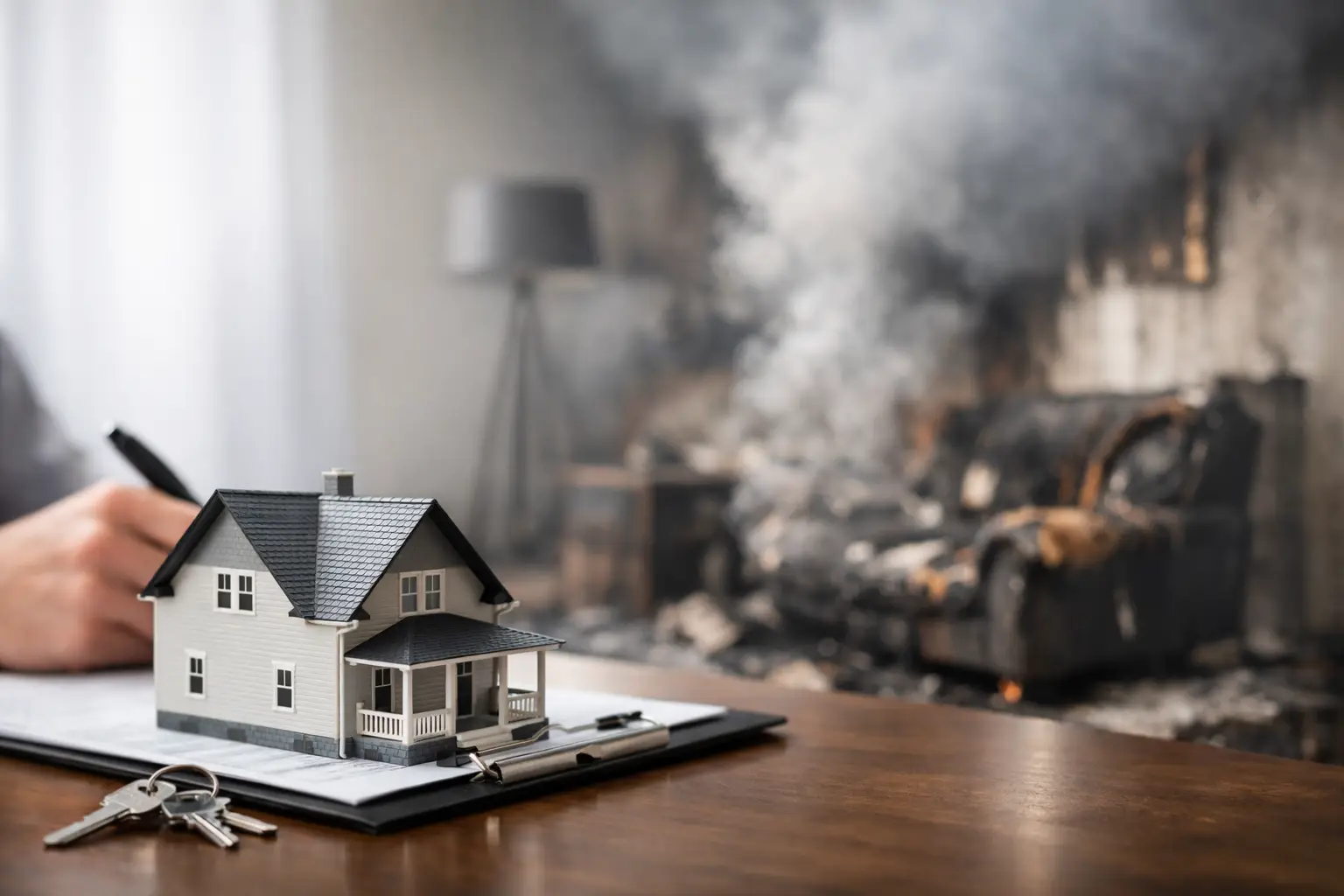
A house does not have to burn for smoke to cause serious damage. In California, that matters more than ever. If a nearby wildfire fills your home with soot, odor, and contamination, a common question is: does home insurance cover smoke damage? In many cases, yes – but the real answer depends on what caused the smoke, what policy you have, and where coverage limits or exclusions apply.
For homeowners, condo owners, and landlords trying to protect property in a difficult insurance market, the details matter. Smoke damage claims can involve cleaning, painting, replacing personal property, temporary housing, and even HVAC remediation. The problem is that people often assume all smoke damage is treated the same way. It is not.
Does home insurance cover smoke damage from wildfires?
Most standard homeowners insurance policies cover smoke damage when it is caused by a covered peril, and wildfire is usually one of those covered perils. That means if smoke from a wildfire enters your home and damages walls, ceilings, floors, furniture, clothing, or other belongings, your policy may help pay for repairs or replacement, subject to your deductible and policy limits.
This is one reason California homeowners need to read beyond the declarations page. In a wildfire event, the damage may not be limited to obvious burn marks. Smoke particles can settle inside insulation, air ducts, upholstery, drapes, and electronics. Odor can linger long after the visible residue is cleaned. A good claim evaluation looks at both visible and hidden damage.
That said, coverage is never automatic just because smoke is present. The carrier will look at the cause of loss, the extent of damage, and whether the affected property can be cleaned or needs to be replaced. Some items can be restored. Others, especially porous materials or sensitive electronics, may not be salvageable.
When smoke damage is usually covered
Home insurance generally covers smoke damage if it results from a sudden and accidental covered event. A house fire is the clearest example, but the same principle may apply if smoke travels from a neighboring structure fire or a wildfire.
If your policy includes dwelling coverage, that portion may help pay to repair the structure itself – things like drywall, paint, cabinets, flooring, or built-in features. Personal property coverage may apply to furniture, clothing, rugs, and household items damaged by smoke or soot. If the home becomes temporarily uninhabitable during cleanup, loss of use coverage may help with added living expenses such as hotel stays, meals above your normal costs, and other temporary housing expenses.
For condo owners, the analysis is a little different. Your HO-6 policy may cover your personal belongings, interior improvements, and loss of use, while the condo association’s master policy may insure parts of the building. Smoke claims in condos can get complicated fast, especially when the source of the smoke came from another unit or a common area.
When smoke damage may not be covered
This is where the phrase “it depends” becomes important. Home insurance often does not cover smoke damage if the cause falls under an exclusion, if the damage developed gradually, or if it resulted from poor maintenance.
For example, smoke staining from a long-term fireplace issue, a malfunctioning wood stove you failed to maintain, or repeated indoor smoking is unlikely to be treated the same as wildfire smoke from a sudden outside event. Insurers draw a line between sudden accidental loss and damage that could have been prevented through upkeep or normal care.
Another issue is vacancy or occupancy. If a home is vacant for too long, certain coverages may be reduced or excluded, depending on the policy terms. If a claim happens during a period that violates policy conditions, that can create problems.
California property owners should also pay attention to policy form differences. Not every home policy on the market offers identical protection. Some policies are broader. Others are more restrictive. If you have been moved to a different carrier, accepted a non-standard policy after a non-renewal, or paired coverage with the California FAIR Plan, you should not assume the smoke claim process will be exactly the same as it was under your previous carrier.
What about the California FAIR Plan?
This matters for many homeowners in wildfire-prone areas. The California FAIR Plan is often used when traditional admitted carriers are no longer available, but it is not a full substitute for a standard homeowners policy by itself. It is designed primarily to provide basic property coverage, usually for fire and certain named perils, and many homeowners pair it with a Difference in Conditions policy to fill gaps.
If you have FAIR Plan coverage, smoke damage may be covered when it results from a covered fire-related event, but you need to understand exactly what your FAIR Plan policy covers and what your companion policy handles. Personal liability, water damage scenarios, theft, and loss of use are examples of areas that may require separate coverage depending on how your insurance is structured.
This is one of the biggest reasons California homeowners benefit from a policy review. The question is not just whether smoke damage is covered. The question is whether your overall insurance setup responds the way you think it does after a wildfire event.
How smoke damage claims are typically handled
After a smoke loss, the insurer usually wants prompt notice, documentation, and evidence of the extent of damage. That means taking photos and videos as soon as it is safe, making a list of affected items, and avoiding any unnecessary disposal before the adjuster or restoration professionals have evaluated the loss.
Many smoke claims involve specialized cleaning companies. They may test surfaces, inspect the HVAC system, assess air quality concerns, and determine whether contents can be cleaned or should be replaced. The cost can be substantial, especially if soot spread through the ventilation system or if the odor penetrated insulation, carpets, and soft goods.
One trade-off homeowners sometimes face is repair versus replacement. The insurer may determine that an item can be professionally cleaned, while the homeowner believes replacement is more appropriate. That disagreement is common with clothing, upholstered furniture, mattresses, and electronics. The stronger your documentation, the easier it is to support your position.
Does home insurance cover smoke damage to personal belongings?
Often yes, but personal property coverage still has limits. If smoke affects clothing, furniture, artwork, appliances, or electronics, your policy may pay based on actual cash value or replacement cost, depending on how your policy is written.
That difference matters. Actual cash value factors in depreciation, which can leave you with a lower claim payment. Replacement cost coverage is generally stronger because it is designed to pay what it costs to replace the item today, subject to policy terms. For higher-value belongings, special limits or endorsements may also apply.
If you have collectibles, jewelry, fine art, or specialty equipment in the home, smoke damage can expose underinsurance quickly. A standard policy may not fully protect those items without additional scheduling or endorsements.
What homeowners should check before a smoke claim happens
The best time to review smoke damage protection is before fire season, not after. Look at your dwelling limit, personal property limit, deductible, and loss of use coverage. Confirm whether you have replacement cost or actual cash value on contents. If your home is insured through the FAIR Plan or through a layered arrangement, make sure you understand which policy handles which type of loss.
It also helps to keep a home inventory. Photos of each room, receipts for major purchases, and a record of upgrades can make a major difference during a smoke claim. In California, where wildfire losses can affect entire neighborhoods at once, delays and claim volume are common. Clear documentation helps move the process forward.
For many families, the larger issue is not just filing a claim. It is making sure the insurance program still fits the current market. Rising rebuild costs, restricted carrier appetite, and changing wildfire risk have left many homeowners with policies that deserve a second look.
If you are unsure whether your current policy would respond well after a wildfire smoke event, getting an experienced review can help clarify your options. Safe is Better works with California clients who need that kind of guidance in a market that has become harder to navigate.
Smoke damage is often covered, but not always in the way people expect. A careful policy review now can spare you from expensive surprises when the air clears and the real cleanup begins.