
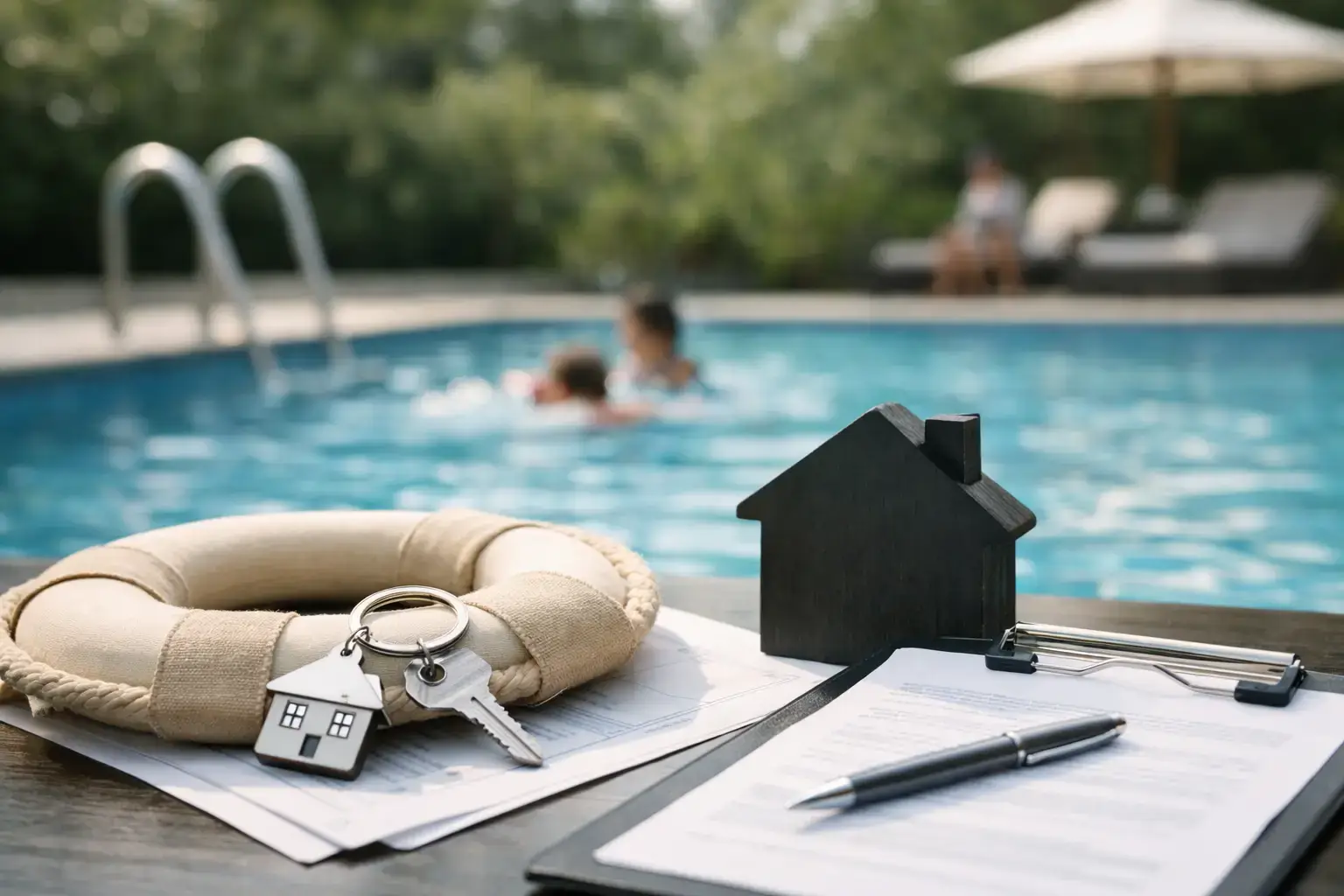
A backyard pool can be one of the best parts of owning a California home. It can also create a serious financial exposure that is easy to underestimate. Liability insurance for pool owners is designed to help when someone is injured, or their property is damaged, and the homeowner is found legally responsible. The question is not whether you expect an accident. It is whether your current coverage could protect your savings, home, and future income if one occurs.
Pools are often described as an “attractive nuisance” in insurance and legal conversations. That means they can draw children or other visitors onto a property, including people who were not invited. A locked gate, alarm, cover, and other safety measures are essential, but they do not eliminate the possibility of a claim. California homeowners should treat pool liability as a coverage issue and a safety issue.
What Liability Insurance for Pool Owners May Cover
The personal liability section of a homeowners policy generally responds when an insured household member is legally liable for bodily injury or property damage to another person. With a pool, that could involve a guest slipping on wet decking, a child being injured while swimming, or an accident involving pool equipment.
When coverage applies, the policy may pay for legal defense costs and damages up to the policy limit. Legal defense is a major part of the value. Even when a homeowner believes they did nothing wrong, responding to a lawsuit can be expensive.
Most homeowners policies also include medical payments coverage, which may pay smaller medical bills for guests injured on the property without requiring a finding of fault. This is not a substitute for personal liability coverage. Medical payments limits are usually much lower and are intended for more limited situations.
Coverage always depends on the policy language and the facts of the loss. An insurer will evaluate whether the pool was properly disclosed, whether the property meets underwriting requirements, who was involved, and whether an exclusion applies. That is why reviewing the actual policy before an incident is far better than discovering a gap after one.
Why Standard Limits May Not Be Enough
Many homeowners policies start with $100,000 or $300,000 in personal liability coverage. Those limits can sound substantial until a severe injury is involved. A pool-related injury can lead to emergency treatment, rehabilitation, lost income, long-term care needs, legal costs, and a claim for pain and suffering.
If a court judgment or settlement exceeds the homeowners liability limit, the homeowner may be personally responsible for the difference. Depending on the circumstances, personal assets and future earnings may be at risk.
For many pool owners, $500,000 in underlying liability coverage is a more realistic starting point for discussion. Households with significant savings, home equity, investments, high income, teenage drivers, frequent guests, or rental properties may need more. There is no universal limit that fits every household, but a pool is a clear reason to look beyond the minimum.
An umbrella policy can provide an additional layer of personal liability protection above the limits on a homeowners and auto policy. Common umbrella limits begin at $1 million, though higher limits may be appropriate for households with greater assets or exposure. Umbrella coverage is often one of the more cost-effective ways to add meaningful protection, but it typically requires certain minimum liability limits on the underlying home and auto policies.
California Pool Risks Are Not Just About Swimming
The classic pool claim involves a guest who is injured in the water, but liability can arise in less obvious ways. A guest may trip over uneven concrete, be hurt by a diving board, suffer an injury from a loose handrail, or be injured when pool equipment malfunctions. A dog, trampoline, outdoor kitchen, or alcohol at a pool gathering can add another layer of risk.
California homeowners also need to consider local pool-safety rules. Requirements can vary based on the property, pool type, and jurisdiction, but barriers and controlled access are central concerns. Compliance with safety rules does not guarantee that a liability claim will be dismissed. However, failing to maintain required safeguards can make a difficult situation worse and may create underwriting problems at renewal.
A pool should be disclosed to the insurance carrier. Do not assume a carrier will accept every pool feature simply because it was present when you bought the home. Diving boards, slides, lack of fencing, a history of claims, or a pool used for business purposes can affect eligibility and pricing. In California’s challenging insurance market, an undisclosed pool can create an unwelcome issue during inspection, renewal, or a claim.
Guests, Trespassers, and Rental Use
Invited guests are the most obvious source of exposure, especially during parties and family gatherings. Yet a homeowner’s duty may not end with invited visitors. Children who enter an accessible pool area without permission can still result in a serious claim. Reliable barriers, self-closing and self-latching gates, and supervision are practical protections for both families and visitors.
Short-term rental use requires special attention. A standard homeowners policy may limit or exclude losses connected to business activity or certain rental arrangements. If guests are paying to use the property, the pool, or a guesthouse, do not assume your ordinary personal policy will respond as it would for a neighbor visiting for the afternoon. Review the arrangement before accepting bookings.
Steps to Take Before the Next Pool Season
Start by reading the declarations page of your homeowners policy. Find the personal liability limit and medical payments limit. If you cannot readily identify them, ask your insurance advisor to explain what you have and what would need to happen before umbrella coverage applies.
Next, confirm that the pool and its features were disclosed accurately. This includes a diving board, slide, spa, pool heater, fence, and any recent renovations. If you have added a feature since the policy began, report it rather than waiting for a home inspection or claim.
Then look at the property through the eyes of a guest. Check gate latches, fencing, drain covers, deck surfaces, lighting, handrails, and equipment. Establish clear pool rules, particularly for children and non-swimmers. During gatherings, a responsible adult should be focused on supervision rather than assuming everyone is watching.
Finally, review your full household liability picture. A pool is only one exposure. Teen drivers, dogs, recreational vehicles, rental homes, and volunteer activities can all affect the amount of protection your household needs. A coordinated review of home, auto, and umbrella coverage is more useful than increasing one policy limit in isolation.
Common Questions From Pool Owners
Does homeowners insurance automatically cover my pool?
The pool itself may be covered as part of the home, other structures, or personal property section of a policy, depending on whether it is in-ground or above-ground and how it is installed. Liability coverage is a separate question. Tell the carrier about the pool so the policy can be evaluated correctly.
Will a pool raise my homeowners insurance premium?
It may. The impact depends on the carrier, location, pool type, safety features, claims history, and other underwriting factors. Some insurers may decline certain risks or require specific safeguards. In California, carrier appetite can be limited, so it is especially helpful to address pool details early.
Is an umbrella policy worth it for a pool owner?
For many homeowners, yes. A serious injury can exceed standard homeowners liability limits quickly. Whether an umbrella is appropriate depends on your assets, income, household risks, and the required underlying limits, but a pool is a strong reason to discuss one.
A pool should bring enjoyment, not constant worry. The practical approach is to maintain strong safety measures, disclose the property accurately, and make sure your liability limits reflect what you could lose. A careful policy review now can provide far more confidence when friends and family gather in your backyard.