
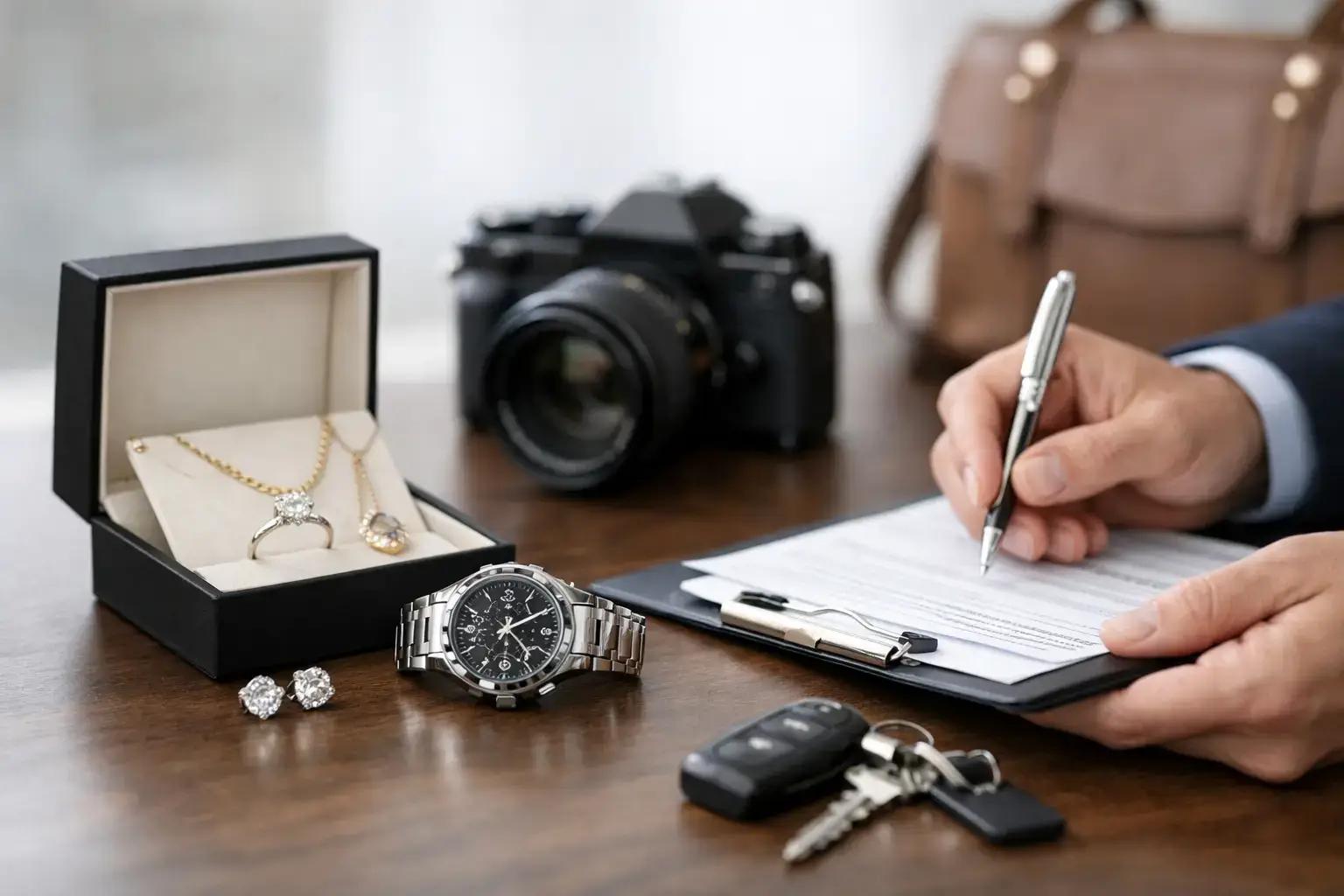
A homeowner may have a $15,000 jewelry collection, a family heirloom ring, a professional camera kit, and a watch worn every day – then assume a homeowners policy will cover it all. Often, it will not. Scheduled personal property insurance is designed to close that gap by providing specific protection for valuables that may exceed the limited coverage in a standard homeowners, condo, or renters policy.
For California households, this conversation matters even more when insurance options are limited or premiums are under pressure. The goal is not to buy coverage for every possession. It is to identify the belongings that would create a serious financial loss if they were stolen, damaged, or lost, then make sure the policy responds the way you expect.
What Is Scheduled Personal Property Insurance?
Scheduled personal property insurance, sometimes called a personal articles floater or valuable-items endorsement, lets you list individual high-value belongings on your policy. Each item is typically insured for an agreed or appraised amount.
A standard homeowners or condo policy includes personal property coverage, but it also commonly includes special sublimits. Those sublimits can sharply restrict payment for certain categories, including jewelry, watches, firearms, fine art, silverware, collectibles, cameras, and some electronics. A policy may provide substantial overall personal property coverage while limiting theft coverage for jewelry to a much smaller amount.
When an item is scheduled, coverage is generally tailored to that item rather than relying on the policy’s broad personal property limit. Depending on the insurer and policy form, scheduled coverage may also offer broader protection for accidental loss or damage. For example, coverage may apply if a ring is accidentally dropped down a drain or a camera is damaged during travel, situations that may not be covered under a basic homeowners policy.
The exact protection depends on the carrier and endorsement. That is why it is worth reviewing the actual policy language instead of assuming that “scheduled” automatically means every type of loss is covered.
Why Standard Homeowners Coverage May Not Be Enough
Homeowners insurance is built to protect the household as a whole. It covers many belongings after covered events such as fire, theft, or certain types of water damage. But it is not always designed to provide full, flexible protection for a small number of expensive, portable, or difficult-to-value items.
Consider a $12,000 engagement ring. If the policy has a $2,500 theft sublimit for jewelry, the overall personal property limit does not change that restriction. After a theft, the available payment could be far below the cost to replace the ring. A scheduled item can be insured closer to its current value, subject to the policy terms.
This distinction is especially relevant for California residents who have recently changed homeowners insurers, moved to a FAIR Plan arrangement, or accepted a policy with more limited coverage to keep their home insured. The FAIR Plan is an important option for many property owners facing wildfire-related availability issues, but it is generally a basic property policy and may need to be paired with separate coverage. Valuable personal property deserves its own careful review in these situations.
Items That Are Often Worth Scheduling
The right decision depends on the value of the item, its sentimental significance, the policy’s sublimits, and whether you could comfortably replace it yourself. Jewelry is the most common category, particularly engagement rings, wedding bands, watches, necklaces, and inherited pieces.
Fine art, antiques, collectible coins, wine collections, musical instruments, high-end bicycles, cameras, and specialized sporting equipment can also be good candidates. A musician who relies on an instrument for paid performances may need a different type of policy altogether, since personal insurance often excludes or limits business use. The same issue can arise with photography equipment, tools, or computers used primarily for work.
Not every expensive item should automatically be scheduled. A television or laptop may already have adequate coverage under the policy’s general personal property limit, particularly if replacement cost coverage applies and there is no restrictive category limit. Scheduling is most useful where a value exceeds a sublimit, coverage is otherwise narrow, or an item is especially vulnerable to loss away from home.
How Scheduling Changes Your Coverage
A schedule usually identifies the item, its description, and its insured value. For jewelry, that may include the metal, gemstone details, serial number, and appraisal information. For art, the carrier may request photographs, provenance, receipts, or a professional valuation.
Many scheduled-property endorsements offer three meaningful advantages. First, they can provide a higher limit for a specific item. Second, they may cover a wider range of losses than standard personal property coverage. Third, they often have no deductible, although that varies by insurer.
Those benefits come with trade-offs. You pay an additional premium, and you may need updated documentation. The insurer can also have specific valuation rules. Some policies pay to repair or replace an item, while others use an agreed-value approach. If a piece has risen significantly in value since it was added, an old scheduled amount may no longer be enough.
That last point is easy to overlook. A ring insured for $8,000 five years ago may cost far more to replace now. An appraisal should not simply sit in a drawer after the policy is issued.
The Appraisal Question: What You Need and When
Insurers often require an appraisal for higher-value jewelry, fine art, antiques, and collectibles. A quality appraisal should describe the item in detail and state a current replacement value. A sales receipt can help establish ownership, but it may not reflect what the item costs to replace today.
For newer jewelry purchases, ask the jeweler whether the paperwork includes a replacement appraisal. For older or inherited items, use a qualified appraiser familiar with the type of property being valued. Keep digital copies of appraisals, receipts, photographs, and serial numbers somewhere other than your home, such as secure cloud storage.
Appraisals are not permanent. Jewelry values, precious-metal prices, art markets, and replacement costs change. Reviewing scheduled values every two to three years is a reasonable starting point, and sooner is wise after a major purchase, inheritance, remodel, marriage, divorce, or move.
Questions to Ask Before Adding an Item
Before you schedule a valuable, ask whether the coverage applies worldwide or only at your residence. Ask whether mysterious disappearance and accidental damage are covered, whether a deductible applies, and how claims are settled. It is also useful to ask whether the insurer will require a new appraisal after a certain period.
If the item is part of a collection, clarify whether the policy covers the entire collection, individual pieces, or only the items specifically listed. A blanket valuable-items endorsement can sometimes offer a shared limit for multiple smaller valuables without listing every piece, but it may still have per-item limits. That approach can be practical for a collection that changes often, while individually scheduling a single high-value item may offer more certainty.
California homeowners should also ask how the endorsement fits with their current property insurance arrangement. If your home coverage is split between the California FAIR Plan and a separate companion policy, do not assume valuables are handled the same way they were under your previous homeowners policy. Review both policies together.
A Practical Way to Review Your Valuables
Start with a walk through your home. Open the jewelry box, photograph artwork on the walls, check storage areas, and note items that travel outside the house. Do not limit the review to what is most expensive. Think about what would be difficult to replace, whether because of cost, rarity, or personal meaning.
Next, compare that inventory with the special limits and deductibles in your current policy. A $5,000 deductible may be sensible for a property claim, but it is not a comfortable fit for a $3,000 watch unless the watch has separate coverage with no deductible. This is where the details matter more than a quick comparison of premium prices.
Finally, update the policy after life changes. New jewelry, a growing art collection, an inherited firearm, or upgraded camera equipment can change your exposure quickly. Coverage should keep pace with the household it is meant to protect.
A well-structured policy does not eliminate the disappointment of losing something valuable. It can, however, prevent a difficult loss from becoming a financial surprise. Taking a few minutes to identify your most important belongings and review their coverage is a practical way to protect what matters before you need to make a claim.