
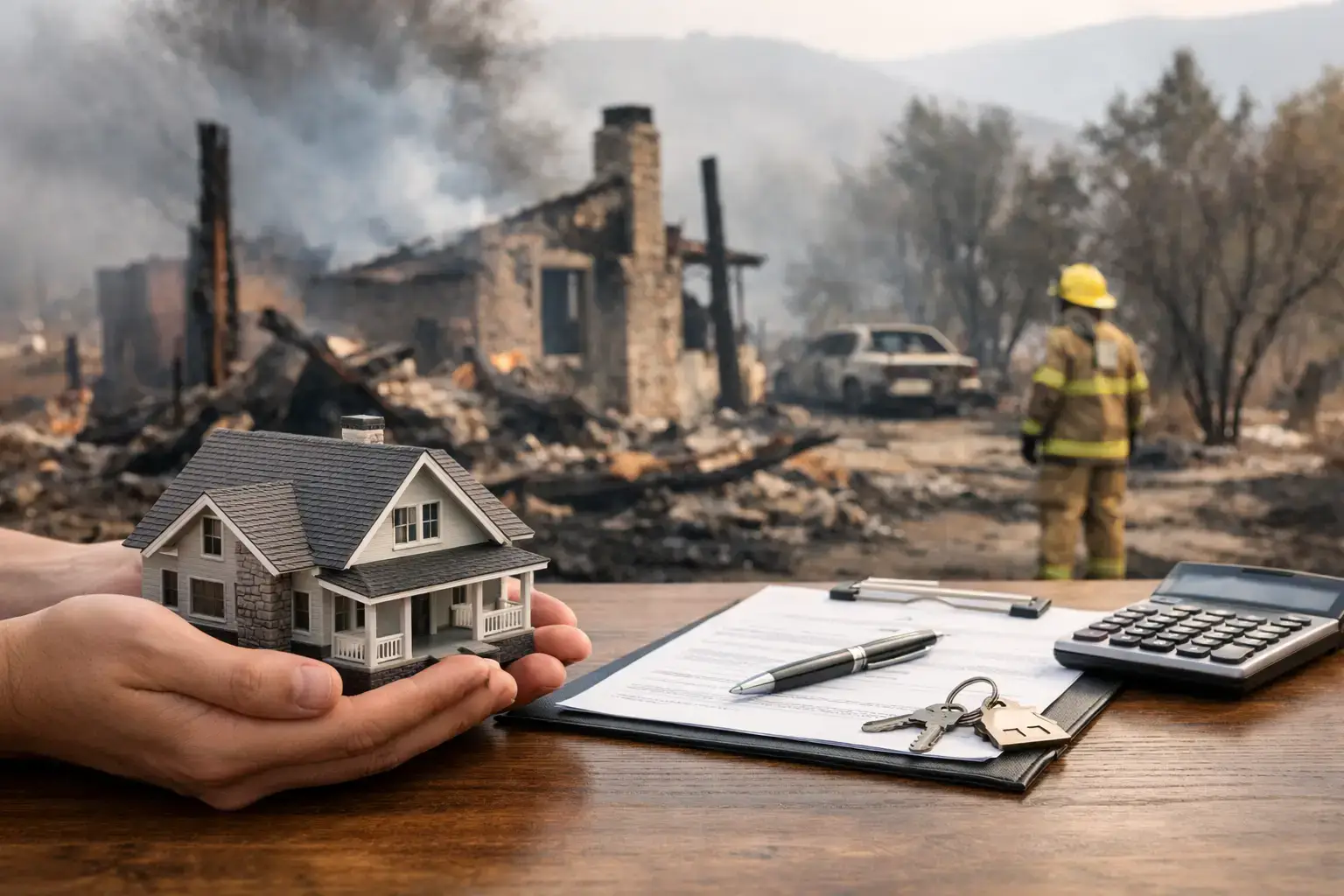
The first days after a wildfire are not the time most homeowners expect to become claim experts. Yet wildfire claim recovery often depends on decisions made early: documenting damage before cleanup removes evidence, understanding what the policy will pay for, and keeping every rebuilding conversation organized. For California homeowners, a steady process can make an overwhelming loss more manageable.
A claim is not simply a check for the visible damage. It is a detailed review of your dwelling, belongings, temporary living costs, debris removal, code upgrades, and the work needed to return the property to a safe, livable condition. Your insurer has a role in that process, but you also have a responsibility to understand the claim, ask questions, and protect your own interests.
Start Wildfire Claim Recovery With Safety and Documentation
Do not enter a damaged property until local officials say it is safe. Burned areas can have unstable structures, downed lines, hazardous ash, and contaminated water. Once access is permitted, photograph and video the exterior and interior from multiple angles before repairs or debris removal begin. Capture structural damage, landscaping, fences, detached structures, vehicles, and any remaining personal property.
If the home is a total loss, document what you can without putting yourself at risk. Photos from before the fire, real estate listings, inspection reports, receipts, maintenance records, and family photos can all help establish what existed. Ask neighbors, contractors, or relatives whether they have photos that show the home or its contents.
Create one claim file, whether it is a physical folder, a cloud folder, or both. Keep copies of your policy, claim number, adjuster contact information, emails, letters, estimates, invoices, receipts, and notes from phone calls. After a call, write down the date, the person you spoke with, and what was discussed. Good records reduce misunderstandings months later, when details are harder to recall.
File Promptly, Then Learn What Your Policy Actually Covers
Notify your insurer as soon as you reasonably can. Give accurate basic facts, but do not guess at the cause, value, or full extent of damage before the investigation is complete. Ask how to submit receipts, where to send estimates, who your primary claim contact will be, and what deadlines apply.
Then review the declarations page and the policy language with care. The declarations page is the quick snapshot of your limits and deductibles. The full policy explains the conditions, exclusions, and how specific coverages are paid. If the language is unclear, ask your agent or claims representative to explain it in plain English.
For a wildfire loss, homeowners should pay close attention to several coverage categories. Dwelling coverage applies to the house itself. Other structures coverage may apply to detached garages, sheds, fences, and similar structures. Personal property coverage addresses belongings. Loss of use, often called additional living expense coverage, can help pay reasonable extra costs when you cannot live at home because of a covered loss.
Also ask whether the policy includes extended replacement cost, guaranteed replacement cost, ordinance or law coverage, debris removal coverage, and landscaping coverage. These provisions can matter greatly after a regional disaster, when labor and material costs rise quickly and local building standards may require upgrades during reconstruction. Coverage varies by carrier and policy, so assumptions can be costly.
Separate Immediate Funds From the Final Settlement
Many wildfire claims involve more than one payment. An insurer may issue an initial payment for emergency needs, a partial payment for known damage, or an advance for temporary housing. These payments can be helpful, but they may not represent the final value of your entire claim.
Read accompanying letters carefully. Ask what each payment is for and whether accepting it affects any remaining portion of the claim. In many situations, an initial payment is not a final settlement, but a release, settlement agreement, or proof-of-loss form deserves careful attention before signing. If you do not understand a document, pause and ask for an explanation.
Additional living expenses deserve special attention. Save every receipt for hotel stays, short-term rentals, added mileage, storage, pet boarding, laundry, restaurant meals beyond your normal grocery costs, and other necessary increased living expenses. The key word is usually “additional.” If your normal grocery spending was $200 per week and displacement caused it to become $450, the added $250 may be the relevant expense. Your policy may also have a dollar limit and a time limit, which are not always the same thing.
If you plan to rent a long-term home, confirm the rental budget with the insurer before signing a lease. In a major fire area, temporary housing can be scarce and expensive. A written understanding of what will be paid can prevent a difficult dispute later.
Build a Complete Scope of Damage
The insurer will generally inspect the loss and prepare an estimate. That estimate is an important starting point, not necessarily the complete answer. Wildfire damage can extend beyond what is obvious, especially with smoke, soot, heat damage, water used in firefighting, damaged electrical systems, and compromised foundations or framing.
Obtain detailed estimates from qualified, properly licensed professionals when appropriate. A useful estimate identifies the specific work, materials, quantities, and costs rather than offering only one broad number. Compare the contractor’s scope with the insurer’s scope line by line. If the contractor includes roof work, smoke remediation, code-required electrical upgrades, or demolition that the insurer’s estimate omits, ask why.
This is not about treating every difference as a fight. Estimates can differ for valid reasons, and some items may need further inspection. The goal is to make sure the scope reflects the actual work needed to restore the covered property. Communicate in writing when possible, provide supporting documentation, and ask the adjuster to re-evaluate supported differences.
Do not rush into a rebuilding contract because you are under pressure to move forward. Verify contractor licensing, insurance, references, project timeline, payment schedule, and the exact work included. Be cautious with large upfront payments or contractors who promise they can “handle everything” without giving you a clear written contract. Your insurance settlement and your construction contract are connected, but they are not the same agreement.
Inventory Belongings Without Undervaluing Your Life
Personal property claims are often one of the most time-consuming parts of wildfire claim recovery. A home contains hundreds of items that are easy to overlook: kitchen tools, clothing, linens, small electronics, books, seasonal decorations, garage equipment, sporting goods, and furniture accumulated over many years.
Start room by room. List the item, approximate age, brand or model if known, purchase price if known, and replacement cost. Receipts are useful but not required for every ordinary household item. Credit card statements, online order histories, warranty documents, photographs, and product searches can help support the inventory.
Your payment may depend on whether the policy provides replacement cost coverage or actual cash value coverage for personal property. Actual cash value generally reflects depreciation. Replacement cost coverage may allow additional payment after you replace an item, subject to policy terms. Ask how your policy handles depreciation, replacement deadlines, and items with special limits, such as jewelry, art, firearms, collectibles, or business equipment.
Expect a Long Process and Protect Your Options
Large wildfire claims rarely resolve in a few weeks. Rebuilding can take many months or longer because of permitting, contractor availability, debris clearance, financing, supply costs, and local infrastructure repairs. Stay responsive, but do not confuse persistence with rushing. You are entitled to ask questions, request written explanations, and seek review when an estimate or coverage decision does not make sense.
Mortgage lenders may also be involved if they are named on dwelling claim checks. That can add another administrative step. Contact the lender early to learn its endorsement and fund-release process, especially if reconstruction funds will be held in escrow.
California homeowners who were insured through the California FAIR Plan should be particularly careful to understand the structure of their protection. A FAIR Plan policy may address fire coverage, while a separate difference-in-conditions policy may address liability, water damage, theft, and other exposures. Claims should be reported to the appropriate insurer based on the damage involved. The policies work differently, and neither should be assumed to cover what the other was intended to cover.
If the claim becomes stalled or confusing, begin by escalating calmly within the insurer’s claims organization and documenting the issue. For substantial disagreements, homeowners may consider consulting a qualified attorney, public adjuster, or construction professional. The right option depends on the size and complexity of the loss, the policy language, and whether the disagreement concerns coverage, scope, or valuation. Professional help has costs, so understand the arrangement before hiring anyone.
A wildfire can change a home and a community in a single afternoon. The recovery process should not force you to accept uncertainty about what your insurance is meant to provide. Keep records, ask direct questions, and make decisions at a pace that protects your family, your property, and your ability to rebuild well.