
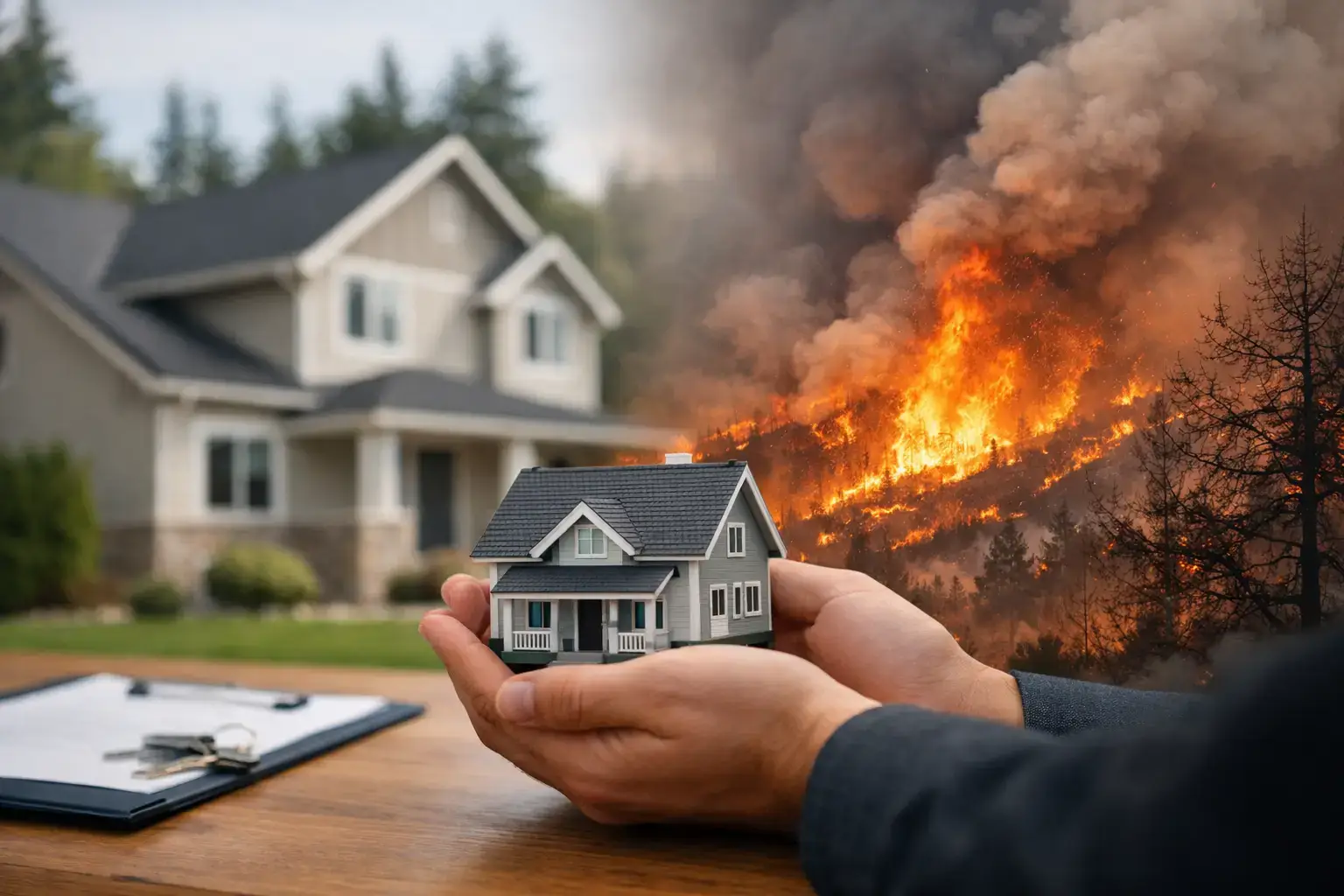
A non-renewal notice can make a California homeowner feel as if they have done something wrong. Often, they have not. The future of wildfire home insurance is being shaped by a larger change: insurers are reassessing where, how, and at what price they can offer coverage as wildfire losses become more severe and less predictable.
For homeowners, the practical question is not whether insurance will still be available. It is how to build dependable protection when carrier options, underwriting rules, and premiums can change quickly. A thoughtful review now can make a major difference when a policy is due for renewal or a notice arrives.
Why wildfire insurance is changing
Wildfire risk is no longer evaluated only by looking at a home’s distance from brush or forest. Insurance companies use increasingly detailed models that consider vegetation, slope, road access, wind patterns, local fire response, prior losses, rebuilding costs, and the likelihood that a fire could affect an entire region at once.
That last factor matters greatly. A single major wildfire can damage thousands of homes, disrupt communities, and create billions of dollars in claims. When losses are concentrated in one area, insurers must hold more financial resources to pay claims. Some carriers respond by limiting new business in certain ZIP codes, reducing the number of homes they insure, tightening eligibility requirements, or choosing not to renew existing policies.
California’s insurance market also operates within a regulated environment. Rate changes and underwriting practices do not happen overnight, which can lead to periods where carriers believe their pricing does not reflect their risk. The result for consumers can be fewer standard-market choices, even for homes that have never had a claim.
This does not mean every property in a wildfire-prone area will be uninsurable. It does mean that a homeowner’s location, construction, maintenance, and insurance history may receive closer attention than they did a few years ago.
The future of wildfire home insurance will be more individualized
For years, many homeowners thought of insurance pricing mostly in terms of their home’s value, deductible, claims history, and credit-based insurance score where permitted. Those factors still matter, but property-specific wildfire characteristics have become more influential.
A home on a narrow road with limited evacuation access may be evaluated differently from a similar home a few miles away on a wider, well-maintained street. A property with a wood shake roof, combustible fencing connected to the structure, or dense vegetation near the home may face different underwriting results than a hardened home with defensible space.
This can feel frustrating because homeowners cannot control every condition around them. They can, however, improve the factors within their control and document those improvements. Clearing debris from roofs and gutters, maintaining defensible space, using ember-resistant vents, improving address visibility, and replacing vulnerable materials may help a property meet a carrier’s eligibility requirements. They may not guarantee a lower premium or acceptance, but they can improve the conversation.
Community conditions may matter more, too. Fire-safe community programs, improved access routes, vegetation management, and local mitigation efforts can strengthen a neighborhood’s overall insurance profile over time. Individual preparation and community preparation increasingly work together.
More homeowners may use layered coverage
In many higher-risk California areas, the standard homeowners policy may not be the full answer. A homeowner may need a layered approach: a California FAIR Plan policy for fire coverage, combined with a separate Difference in Conditions policy that provides liability, water damage, theft, and other coverage the FAIR Plan does not provide in the same way as a traditional homeowners policy.
The California FAIR Plan is an essential safety net, but it is not designed to be identical to a comprehensive homeowners policy. Its coverage, deductibles, limits, and optional endorsements should be reviewed carefully. Homeowners should not assume that selecting a FAIR Plan policy alone means every common homeowners loss is covered.
A layered arrangement can be more expensive and requires more attention. There may be separate policies, separate deductibles, different claims procedures, and different renewal dates. Still, for some households, it is the most realistic path to keeping mortgage-required fire coverage and preserving broader protection for the home and personal liability.
The right setup depends on the property, available carriers, the home’s replacement cost, and the household’s financial situation. The goal is not simply to find a policy that satisfies a lender. It is to understand what would actually be paid after a covered loss and where important gaps may remain.
Replacement cost will matter as much as availability
Wildfires do more than destroy structures. They can drive up the cost of labor, materials, permits, debris removal, and temporary housing across an entire area. A policy limit that looked reasonable several years ago may not be enough to rebuild a home today.
Homeowners should review the dwelling limit at least annually and after major improvements. A kitchen remodel, room addition, upgraded finishes, detached structure, or new hardscape may affect the amount needed to rebuild. Market value is not the same as replacement cost. A home’s sale price may rise or fall, while its reconstruction cost follows a different path.
Extended replacement cost and guaranteed replacement cost provisions, when available, deserve careful review. These features can provide additional protection beyond the stated dwelling limit under specific conditions, but they are not interchangeable and are not offered on every policy. Read the policy language and ask how the feature applies after a widespread catastrophe.
Loss-of-use coverage also deserves attention. If wildfire makes a home unlivable, additional living expense coverage can help pay for reasonable increases in housing and living costs while repairs or rebuilding are underway. In a regional disaster, temporary housing can be scarce and expensive. A low limit may be exhausted faster than expected.
What homeowners can do before a non-renewal arrives
Waiting until the final weeks before a policy expires narrows the available choices. Insurance companies may require inspections, photographs, mitigation documentation, or time to review an application. Begin early, especially if your home is in or near a higher-risk area.
A practical preparation plan includes four actions:
- Review your current declarations page for dwelling, personal property, liability, loss-of-use, and deductible limits.
- Create or update a home inventory with photos, receipts, and records of improvements stored somewhere other than the home.
- Document mitigation work, including before-and-after photos, contractor invoices, roof information, and any community fire-safety certification.
- Ask an independent insurance professional to review standard-market options, surplus lines options where appropriate, and FAIR Plan combinations before coverage lapses.
Do not cancel an existing policy until replacement coverage is confirmed. A lapse can create complications with your mortgage lender and may make future insurance more difficult or costly to obtain.
It is also wise to look beyond the house itself. Wildfire losses can create liability concerns, vehicle damage, and significant financial strain. Higher personal liability limits and a personal umbrella policy may be worth discussing, particularly for households with substantial assets, teenage drivers, rental properties, or outdoor features that increase liability exposure. An umbrella policy does not replace homeowners coverage, but it can add a valuable layer of liability protection when underlying policies meet its requirements.
Expect more questions, but also more opportunities to prepare
The California market is likely to remain uneven. Some homeowners may see new carrier options over time, while others will continue to face limited availability based on location and property conditions. Premiums may remain higher than many families expect, especially where wildfire exposure and rebuilding costs are significant.
The most useful response is not to chase the lowest number on a quote without comparing coverage. Lower premiums can come with higher deductibles, reduced endorsements, different settlement terms, or exclusions that matter after a loss. A policy should be evaluated based on the protection it provides when the worst day happens, not just the amount due today.
Safe is Better helps California households make sense of these choices by reviewing current coverage, explaining realistic alternatives, and helping clients prepare before a renewal becomes urgent. The insurance market may keep changing, but a well-documented home, accurate replacement limits, and informed guidance can put homeowners in a far stronger position.