
A non-renewal letter can turn wildfire risk from a background concern into an immediate problem. For many homeowners, home hardening for insurance in California is no longer a nice upgrade. It is becoming part of the conversation around keeping coverage, finding new options, and showing insurers that a property has been made more defensible.
That matters because California insurance carriers are looking more closely at property-level wildfire risk than they did a few years ago. The zip code still matters, but so do the roof, vents, windows, siding, nearby vegetation, and the first five feet around the home. If you live in a brush-prone area, foothill community, canyon neighborhood, or another wildfire-exposed part of the state, the condition of the home itself can affect whether you get offered coverage at all.
Why home hardening for insurance in California matters now
The insurance market in California has changed. Some carriers have tightened underwriting, reduced new business, or pulled back from areas with higher wildfire exposure. Others may still write coverage, but they often look for stronger evidence that a home is less likely to ignite during a wind-driven fire.
This is where home hardening comes in. In practical terms, it means upgrading the parts of a home that are most vulnerable to embers, radiant heat, and direct flame contact. From an insurance standpoint, these improvements may help support eligibility, improve underwriting results, or make a home more appealing to certain carriers.
There is no universal promise here. Hardening your home does not guarantee lower premiums, and it does not guarantee that every insurer will offer coverage. Underwriting rules vary, and wildfire models vary too. Still, when the market is tight, a better-protected home can put you in a stronger position than a similar property that has not been updated.
What insurers usually look at
When homeowners hear “wildfire risk,” they often think only about nearby trees or whether they are in a high-risk zone. Insurers usually go further than that. They may evaluate both the surrounding area and the home’s specific construction features.
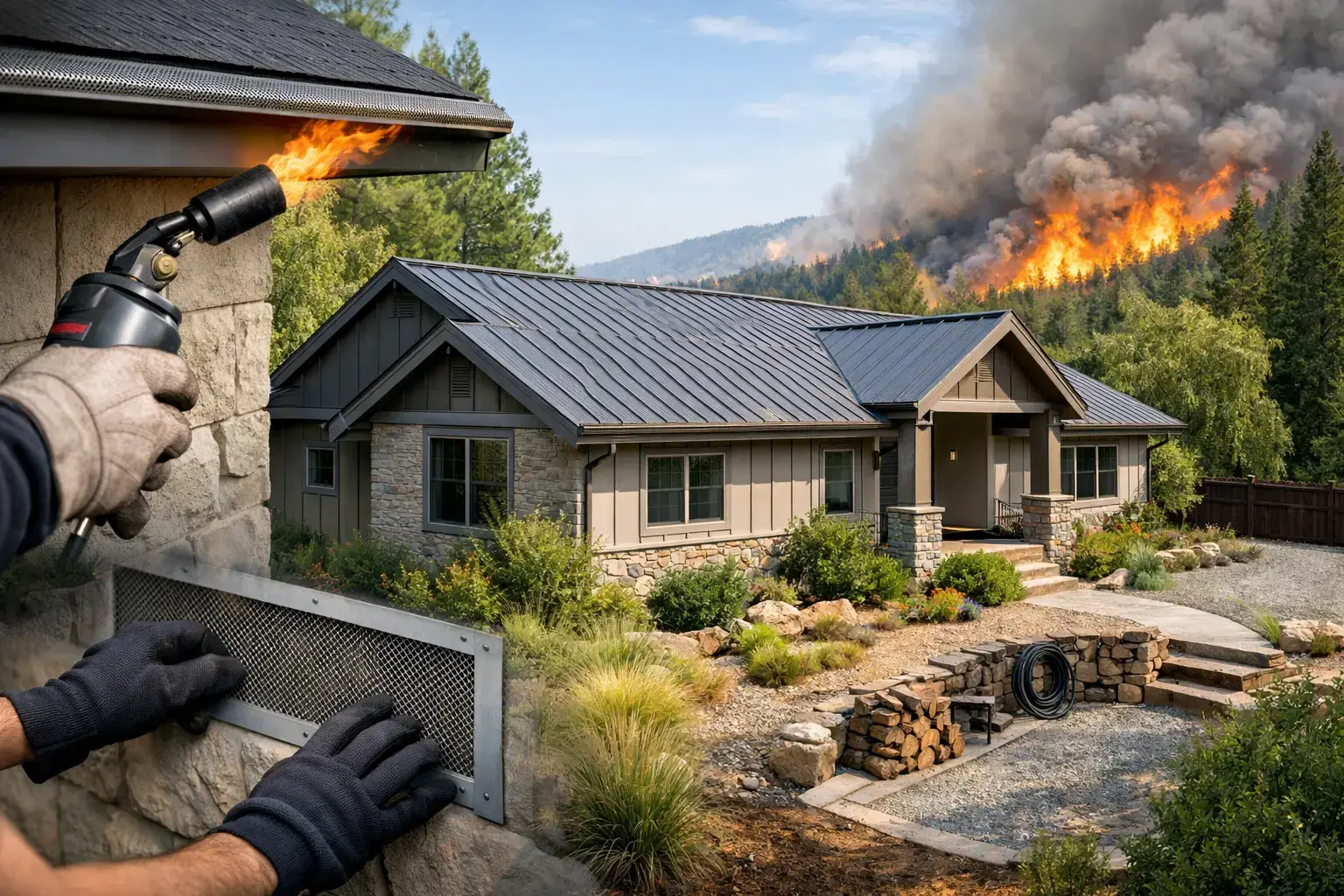
The roof is one of the first items that gets attention. A Class A fire-rated roof is typically viewed more favorably than older wood shake or aging materials in poor condition. Vents matter too, because embers can enter attics and crawl spaces through openings that are not properly protected. Upgraded ember-resistant vents can reduce that exposure.
Windows, siding, decks, fences, and attached structures also come into play. Older single-pane windows may be more vulnerable to heat breakage than dual-pane tempered glass in certain situations. Combustible siding, open eaves, and wood fencing that directly connects to the house can all raise concerns. Even if a carrier does not inspect every detail in person, aerial imagery, inspection reports, and underwriting questionnaires can bring these issues forward.
Then there is defensible space. A property can have a newer roof and still raise red flags if vegetation is overgrown, gutters are full of debris, or the area closest to the home has combustible mulch and stacked firewood. Insurers increasingly care about the “immediate zone” around the home, not just acreage clearance farther out.
The upgrades that often make the biggest difference
If your goal is to improve insurability, it usually makes sense to start with the features that underwriters and wildfire mitigation programs recognize most often.
A fire-rated roof is high on that list. If your roof is older, worn, or made of a material insurers dislike in wildfire-prone areas, replacing it may carry more weight than cosmetic improvements elsewhere. Ember-resistant vents are another common upgrade because embers are a major cause of home ignition during wildfires.
The area within five feet of the home deserves special attention. Replacing bark mulch with noncombustible ground cover, moving patio furniture cushions away during fire season, clearing leaves from corners and under decks, and relocating firewood can all help reduce vulnerability. This zone is often overlooked because people focus on the larger yard, but insurers and fire agencies increasingly emphasize it.
Windows and enclosed eaves can matter as well, especially for homes in areas with repeated wildfire exposure. If you are already planning renovations, choosing materials and designs with wildfire resistance in mind can be a smart insurance move. The same goes for replacing combustible fencing sections where they attach to the home.
Home hardening for insurance California homeowners should prioritize first
Not every homeowner has the budget to do everything at once. If you need to prioritize, focus first on improvements that address ignition risk and show clear underwriting value.
Start with health and safety issues and visible maintenance problems. A roof near the end of its life, missing screens on vents, accumulated debris, and heavy vegetation against the house can hurt you with insurers faster than less obvious vulnerabilities. These are also the issues most likely to show up in inspections or photos.
Next, think in layers. The roof, vents, immediate perimeter, and vegetation management usually come before larger remodel projects. After that, consider windows, siding, decks, and other construction details that may further improve wildfire resistance.
It is also worth documenting your work. Keep receipts, contractor invoices, before-and-after photos, and any mitigation certifications or inspection reports. If an underwriter asks for proof, you want it ready. A homeowner who can clearly show what was updated is easier to advocate for than one who only says the home has been improved.
Will hardening your home lower your premium?
Sometimes, but not always in a direct or immediate way.
This is one of the biggest points of confusion for California homeowners. People understandably want to know whether spending money on hardening will produce premium savings large enough to justify the cost. In some cases, there may be discounts or better pricing outcomes. In others, the main benefit is access to coverage that might otherwise be limited or unavailable.
That distinction matters. In a stable insurance market, homeowners often shop for the best rate. In California’s current property market, many are first trying to secure acceptable coverage at all. If home hardening improves your eligibility with an admitted carrier, helps you avoid a worse underwriting outcome, or strengthens your options beyond a last-resort placement, that can be valuable even if the premium reduction is modest.
There are also cases where a home is still considered high risk despite meaningful improvements. Location, slope, road access, nearby fuel load, and regional fire history can still affect underwriting. Home hardening improves the picture, but it does not erase every exposure.
What to do before you spend money
Before making major upgrades, it helps to ask a practical insurance question: which improvements are most likely to matter for my situation?
That answer depends on whether you are trying to prevent non-renewal, qualify with a new carrier, move from FAIR Plan dependency toward broader options, or simply make your home more attractive in a difficult market. A roof replacement may be the right move for one homeowner, while another may benefit more from clearing the immediate zone, replacing vents, and addressing fencing and deck concerns.
This is where a local insurance advisor can help. An independent agent who understands California wildfire underwriting can often identify whether your issue is primarily location-based, condition-based, or a mix of both. That can help you avoid spending thousands on upgrades that do little to improve your insurance options.
If you have already received a non-renewal or are shopping after a carrier withdrawal, timing matters too. Some improvements can be completed quickly. Others require permits, contractors, or larger budgets. In the meantime, you may need to explore backup options while working on the property.
When FAIR Plan coverage enters the picture
For some homeowners, the California FAIR Plan becomes part of the path forward, especially when admitted market options are limited. Home hardening still matters here because mitigation can affect future insurability and may improve your long-term options, even if it does not solve the entire placement problem right away.
The FAIR Plan is not the same as a standard homeowners policy with broad protection. Many homeowners need companion coverage to fill gaps. That is why the goal should not just be getting any policy. The goal is finding the best overall protection available for your property and liability needs while improving the home’s risk profile where you can.
At Safe is Better, this is the kind of issue that calls for more than a quick quote. It takes a careful look at the property, the underwriting obstacles, and the improvements that may actually help.
If your home is in a wildfire-sensitive part of California, think of hardening as both a safety decision and an insurance strategy. The strongest results usually come from practical upgrades, good documentation, and advice that fits your specific property, not a one-size-fits-all checklist. A few well-chosen improvements now can give you more control the next time your coverage is up for review.