
Riding the Pacific Coast Highway is pure freedom. But California won’t let you hit the road without proof of coverage. Let’s break down exactly what the state demands, how you can snag the biggest discounts, and why a smart quote can keep your wallet as happy as your bike. In this guide, you’ll learn everything from minimum liability limits to the best insurers for your riding style. We’ll also cover common mistakes and how to avoid them. Ready? Let’s ride.
1. Understand California’s Minimum Liability Limits
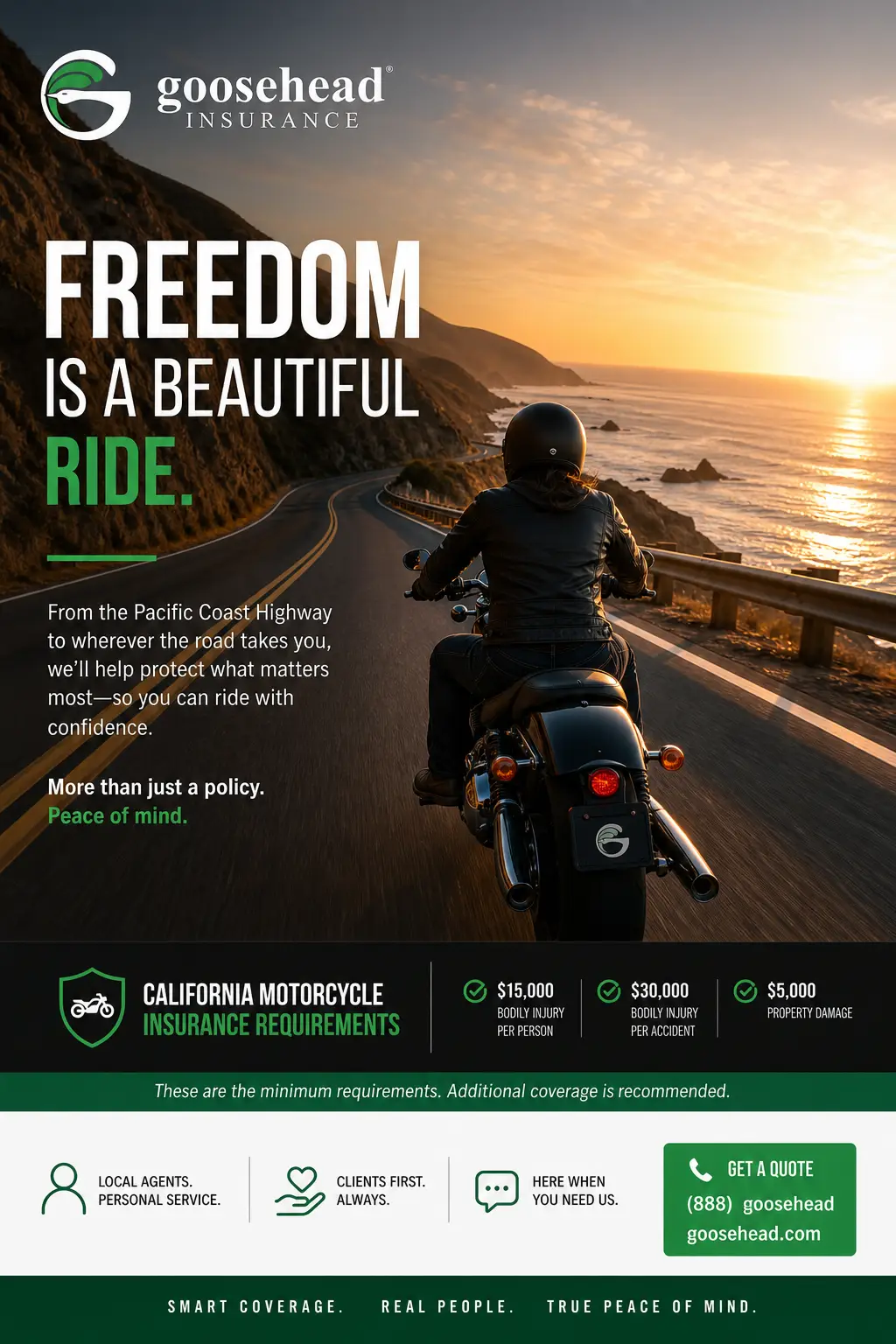
California law says you must have liability insurance to ride. The minimums are 15/30/5. That means $15,000 for injury to one person, $30,000 per accident, and $5,000 for property damage. But here’s the thing: those numbers haven’t changed in years. And with medical bills and repair costs going up, state minimums won’t cover much if you cause a serious crash.
According to the California DMV, you must carry proof of insurance at all times. If you don’t, your registration gets suspended. And getting it back is a hassle.
Think about it this way: if you hit a new car, $5,000 in property damage might not even cover the bumper. And if someone gets hurt, $15,000 won’t go far in a hospital. That’s why most riders carry more than the minimum. A good rule is 100/300/50. That’s $100,000 per person, $300,000 per accident, and $50,000 property damage. The extra cost is usually small compared to the risk.
Bottom line: Always buy more than the bare minimum , it’s the smartest way to protect your financial future.

2. Know the Helmet Law and No-Pay-No-Play Rule
California has a universal helmet law. That means every rider and passenger must wear a DOT-approved helmet. No exceptions. And it’s not just about avoiding a ticket. Not wearing a helmet can hurt your insurance claim if you get into an accident.
California follows comparative negligence. If you weren’t wearing a helmet and suffer a head injury, the insurance company might argue you made it worse. That could reduce your payout by up to 25% or more. As one attorney site explains, not wearing a helmet can significantly impact your ability to recover full compensation.
Then there’s the no-pay-no-play rule. If you ride without insurance and get hit, you can’t collect non-economic damages like pain and suffering , even if the other driver was at fault. That’s a huge loss. So always ride with insurance and a helmet.
Bottom line: Always wear a helmet and carry insurance , both protect your body and your wallet.

3. Maximize Discounts: CMSP, Multi-Bike, and More
Insurance companies offer lots of discounts. But you have to ask. The biggest one in California is the CMSP discount. CMSP stands for California Motorcyclist Safety Program. Take the course, and you’ll save up to 10% to 20% on your premium. Plus, you’ll be a safer rider.
Other discounts include:
- Multi-policy: Bundle your motorcycle insurance with auto or homeowners.
- Multi-bike: Insure more than one cycle on the same policy.
- Mature rider: Some insurers give a discount for riders 50+ (like Geico).
- Military or HOG membership: Harley-Davidson and others offer deals.
- Paid-in-full: Pay the whole year at once to save.
- Anti-theft devices: Discounts for alarms or trackers.
Bottom line: Stack discounts by taking the CMSP course, bundling, and paying annually.
4. Choose Coverage That Fits Your Riding Style
Not all riders need the same coverage. A daily commuter on a scooter needs less than a weekend warrior on a sportbike. Here’s a breakdown of the main coverages and who needs them.
| Coverage | What it pays for | Best for |
|---|---|---|
| Liability | Injuries and damage you cause to others | All riders (legally required) |
| Uninsured/Underinsured Motorist | Your injuries if hit by someone without enough insurance | Everyone – protects you from hit-and-runs and uninsured drivers |
| Complete | Theft, vandalism, fire, animal strikes | Riders who park outdoors or have expensive bikes |
| Collision | Damage to your bike from a crash | Financed bikes or riders who want full protection |
| Medical Payments (MedPay) | Your medical bills regardless of fault | Riders without good health insurance |
| Accessory Coverage | Custom parts, gear, and modifications | Bikes with aftermarket parts |
| Roadside Assistance | Towing, flat tires, battery jump | Long-distance tourers |
Think about your riding habits. If you only ride on sunny weekends and store the bike in a garage, complete might be less critical. But if you commute daily in Los Angeles traffic, uninsured motorist coverage is a must. According to Pronto Insurance, uninsured motorist coverage can save you from financial ruin if an uninsured driver hits you.
Many riders underestimate the value of accessory coverage. That custom exhaust or leather saddlebag can cost thousands. Make sure your policy covers them.
Bottom line: Match your coverage to how and where you ride , don’t buy more than you need, but don’t skimp on essentials like uninsured motorist coverage.
5. Compare Top California-Friendly Insurers
Not every insurer treats California riders the same. Some specialize in certain bike types or offer better discounts. Based on research, here are the top carriers to consider.
- Progressive: Great for flexibility , covers everything from cruisers to sportbikes. Offers disappearing deductible and accident forgiveness.
- Geico: Best for budget-conscious riders, especially those 50+. Competitive rates and solid online tools.
- State Farm: Excellent for bundling. Includes roadside assistance with complete/collision.
- Harley-Davidson Insurance: Tailored for Harley owners. Covers OEM parts and offers trip interruption.
- Dairyland: Good for high-risk riders or those with past claims. Starting at $15/month.
- Foremost: Ideal for vintage or custom bikes , up to $30,000 in custom equipment coverage.
- Voom: Pay-per-mile for occasional riders. No tracking app , just monthly odometer photos.
And don’t forget Goosehead Insurance, an independent brokerage that can shop multiple carriers for you. They help you compare quotes from top companies and find the best deal. Learn more about motorcycle insurance through Goosehead.
Bottom line: Shop around at least once a year , an independent agent can make the process easy and find you the best rate.
6. Avoid Common Pitfalls: Lapses, Storing, and Claims
Even experienced riders make mistakes. Here’s how to avoid the big ones.
Lapses in coverage: If you let your insurance lapse, your registration gets suspended. You’ll pay a fine and may face higher rates later. In California, penalties can be up to $500 or more. A lapse can also lead to license suspension.
Storing your bike: If you stop riding for winter, don’t just cancel your policy. Instead, switch to complete-only coverage , it’s cheap and protects against theft or vandalism. File an Affidavit of Non-Use with the DMV to avoid registration issues.
Filing a claim: After an accident, document everything. Take photos, get witness statements, and report it to your insurer right away. In California, you have up to 10 days to report an accident to the DMV. For more guidance, check out Motorcycle Insurance 101 from Goosehead.
“Riding without insurance is like playing Russian roulette with your finances.”
Bottom line: Prevent lapses, store smart, and know the claims process , it’ll save you time, money, and stress.
Frequently Asked Questions
What is the minimum motorcycle insurance in California?
California requires 15/30/5 liability: $15,000 for injury per person, $30,000 per accident, and $5,000 for property damage. You must also carry proof of insurance at all times. Uninsured motorist coverage can be rejected in writing.
Is motorcycle insurance expensive in California?
Costs vary widely. A basic liability policy from Progressive averaged $195 per year in 2024. But factors like age, bike type, and location can push it higher. Sportbikes and young riders pay more. Discounts from safety courses and bundling help.
Can I get motorcycle insurance without a license in California?
Some insurers may offer a policy without a license, but it’s rare. Most require a valid motorcycle endorsement. If you’re learning, consider a learner’s permit first, then get insured once you have the endorsement.
Does California require uninsured motorist coverage for motorcycles?
California requires uninsured motorist bodily injury coverage by default, but you can reject it with a signed waiver. However, given the high number of uninsured drivers in the state, it’s a bad idea to waive it. It protects you if an uninsured driver hits you.
How can I lower my motorcycle insurance in California?
Take the CMSP safety course, bundle policies, pay annually, and ask about discounts for multi-bike, mature rider, or military. Also, raise your deductibles and drop unnecessary coverage on older bikes.
What happens if I ride without insurance in California?
You can face fines up to $500 for a first offense, plus license suspension for six months. Your bike may be impounded. If you cause an accident, you could be personally liable for all damages, and the no-pay-no-play rule limits your ability to recover damages.
Does insurance cover custom parts and accessories?
Standard policies usually exclude or limit coverage for custom parts. You need to add accessory coverage. Companies like Progressive and Foremost offer up to $30,000 for custom equipment. Always declare any modifications.
Should I buy complete and collision insurance for an old bike?
If your bike is worth less than $2,000 or you could afford to replace it out of pocket, you might skip collision. But complete is still cheap , under $100 a year , and protects against theft and vandalism. Run the numbers: if the premium exceeds 10% of the bike’s value each year, consider dropping collision.
Conclusion
Getting motorcycle insurance in California doesn’t have to be a headache. Start by understanding the state’s minimum requirements , but don’t stop there. Higher liability limits and uninsured motorist coverage are worth the extra few dollars a month. Take advantage of discounts, especially the CMSP safety course. Compare quotes from multiple insurers, or let an independent agent like Goosehead do the legwork for you. Learn why uninsured motorist coverage is essential. Avoid lapses in coverage and always store your bike properly during off-seasons. If you do have an accident, follow the claims process carefully to maximize your payout.
Here’s the bottom line: The best motorcycle insurance policy is the one that fits your needs and your budget. Be informed, ask questions, and shop around. Your wallet , and your bike , will thank you. Ready to find the right coverage? Reach out to a trusted agent today and ride with confidence.